Discharge Or Dismissal - Discharge is normally used in criminal cases, while dismissal applies more to civil law proceedings. A discharge generally means that. A bankruptcy dismissal is the court’s dismissal of a bankruptcy case. A bankruptcy discharge is the court’s forgiveness of the debtor from debts. A discharge frees you from certain debts, giving you a fresh. Discharge and dismissal in bankruptcy are polar opposites. In short, a discharge means that a bankruptcy filer has successfully completed the bankruptcy process, and their remaining debt is forgiven.
A discharge frees you from certain debts, giving you a fresh. A discharge generally means that. A bankruptcy dismissal is the court’s dismissal of a bankruptcy case. A bankruptcy discharge is the court’s forgiveness of the debtor from debts. Discharge is normally used in criminal cases, while dismissal applies more to civil law proceedings. Discharge and dismissal in bankruptcy are polar opposites. In short, a discharge means that a bankruptcy filer has successfully completed the bankruptcy process, and their remaining debt is forgiven.
Discharge and dismissal in bankruptcy are polar opposites. A discharge frees you from certain debts, giving you a fresh. Discharge is normally used in criminal cases, while dismissal applies more to civil law proceedings. A bankruptcy discharge is the court’s forgiveness of the debtor from debts. In short, a discharge means that a bankruptcy filer has successfully completed the bankruptcy process, and their remaining debt is forgiven. A bankruptcy dismissal is the court’s dismissal of a bankruptcy case. A discharge generally means that.

Discharge, Dismissal and Termination PDF Employment Wage
Discharge and dismissal in bankruptcy are polar opposites. A bankruptcy dismissal is the court’s dismissal of a bankruptcy case. In short, a discharge means that a bankruptcy filer has successfully completed the bankruptcy process, and their remaining debt is forgiven. A bankruptcy discharge is the court’s forgiveness of the debtor from debts. Discharge is normally used in criminal cases, while.
Bankruptcy Dismissal vs Discharge O'Bryan Law Offices KY
Discharge and dismissal in bankruptcy are polar opposites. In short, a discharge means that a bankruptcy filer has successfully completed the bankruptcy process, and their remaining debt is forgiven. Discharge is normally used in criminal cases, while dismissal applies more to civil law proceedings. A discharge frees you from certain debts, giving you a fresh. A bankruptcy dismissal is the.

Discharge vs. Dismissal What's the Difference?
In short, a discharge means that a bankruptcy filer has successfully completed the bankruptcy process, and their remaining debt is forgiven. Discharge is normally used in criminal cases, while dismissal applies more to civil law proceedings. Discharge and dismissal in bankruptcy are polar opposites. A bankruptcy discharge is the court’s forgiveness of the debtor from debts. A discharge generally means.

Bankruptcy Dismissal vs. Discharge
A bankruptcy dismissal is the court’s dismissal of a bankruptcy case. Discharge is normally used in criminal cases, while dismissal applies more to civil law proceedings. A discharge frees you from certain debts, giving you a fresh. A discharge generally means that. Discharge and dismissal in bankruptcy are polar opposites.
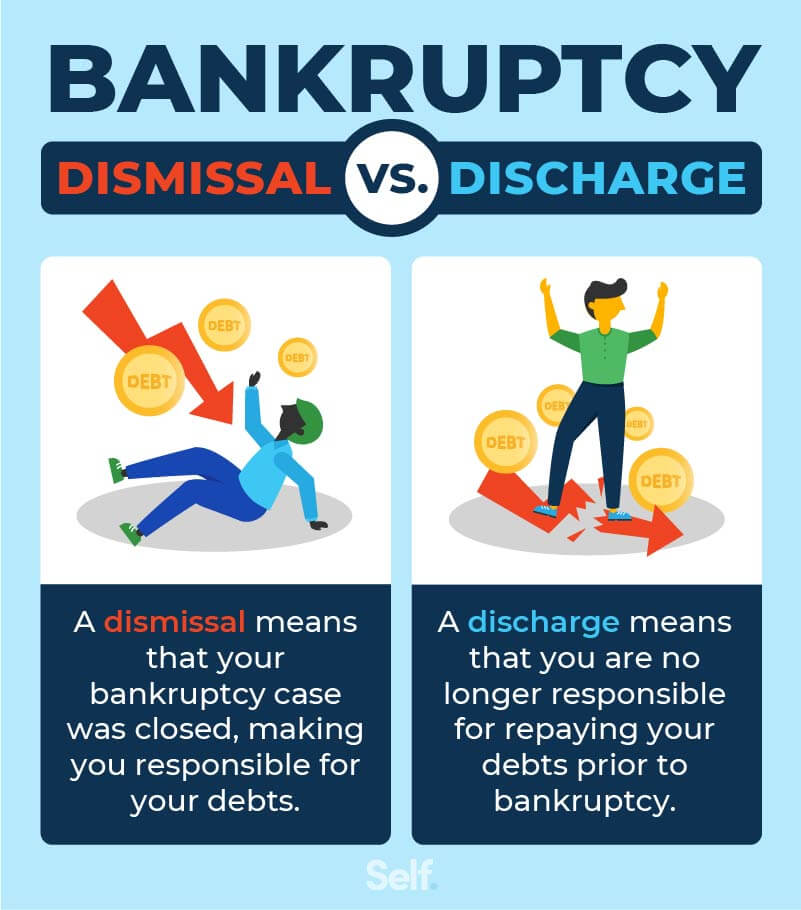
Bankruptcy Dismissal vs. Discharge What's the Difference and How They
A bankruptcy dismissal is the court’s dismissal of a bankruptcy case. A bankruptcy discharge is the court’s forgiveness of the debtor from debts. In short, a discharge means that a bankruptcy filer has successfully completed the bankruptcy process, and their remaining debt is forgiven. A discharge frees you from certain debts, giving you a fresh. Discharge is normally used in.

Bankruptcy Dismissal vs. Discharge
A discharge frees you from certain debts, giving you a fresh. In short, a discharge means that a bankruptcy filer has successfully completed the bankruptcy process, and their remaining debt is forgiven. A bankruptcy discharge is the court’s forgiveness of the debtor from debts. Discharge is normally used in criminal cases, while dismissal applies more to civil law proceedings. A.
Bankruptcy Dismissal vs. Discharge Eric Wilson Law
A discharge generally means that. A bankruptcy discharge is the court’s forgiveness of the debtor from debts. Discharge and dismissal in bankruptcy are polar opposites. Discharge is normally used in criminal cases, while dismissal applies more to civil law proceedings. A bankruptcy dismissal is the court’s dismissal of a bankruptcy case.
Bankruptcy Dismissal vs Discharge O'Bryan Law Offices KY
A bankruptcy discharge is the court’s forgiveness of the debtor from debts. A discharge frees you from certain debts, giving you a fresh. In short, a discharge means that a bankruptcy filer has successfully completed the bankruptcy process, and their remaining debt is forgiven. Discharge and dismissal in bankruptcy are polar opposites. A discharge generally means that.
Bankruptcy Dismissal vs. Discharge Eric Wilson Law
Discharge is normally used in criminal cases, while dismissal applies more to civil law proceedings. A bankruptcy discharge is the court’s forgiveness of the debtor from debts. Discharge and dismissal in bankruptcy are polar opposites. A discharge generally means that. A bankruptcy dismissal is the court’s dismissal of a bankruptcy case.

Discharge & Dismissal PDF
A bankruptcy dismissal is the court’s dismissal of a bankruptcy case. In short, a discharge means that a bankruptcy filer has successfully completed the bankruptcy process, and their remaining debt is forgiven. A discharge frees you from certain debts, giving you a fresh. Discharge is normally used in criminal cases, while dismissal applies more to civil law proceedings. Discharge and.
A Discharge Generally Means That.
A bankruptcy discharge is the court’s forgiveness of the debtor from debts. In short, a discharge means that a bankruptcy filer has successfully completed the bankruptcy process, and their remaining debt is forgiven. Discharge is normally used in criminal cases, while dismissal applies more to civil law proceedings. A discharge frees you from certain debts, giving you a fresh.
A Bankruptcy Dismissal Is The Court’s Dismissal Of A Bankruptcy Case.
Discharge and dismissal in bankruptcy are polar opposites.